
 Available in US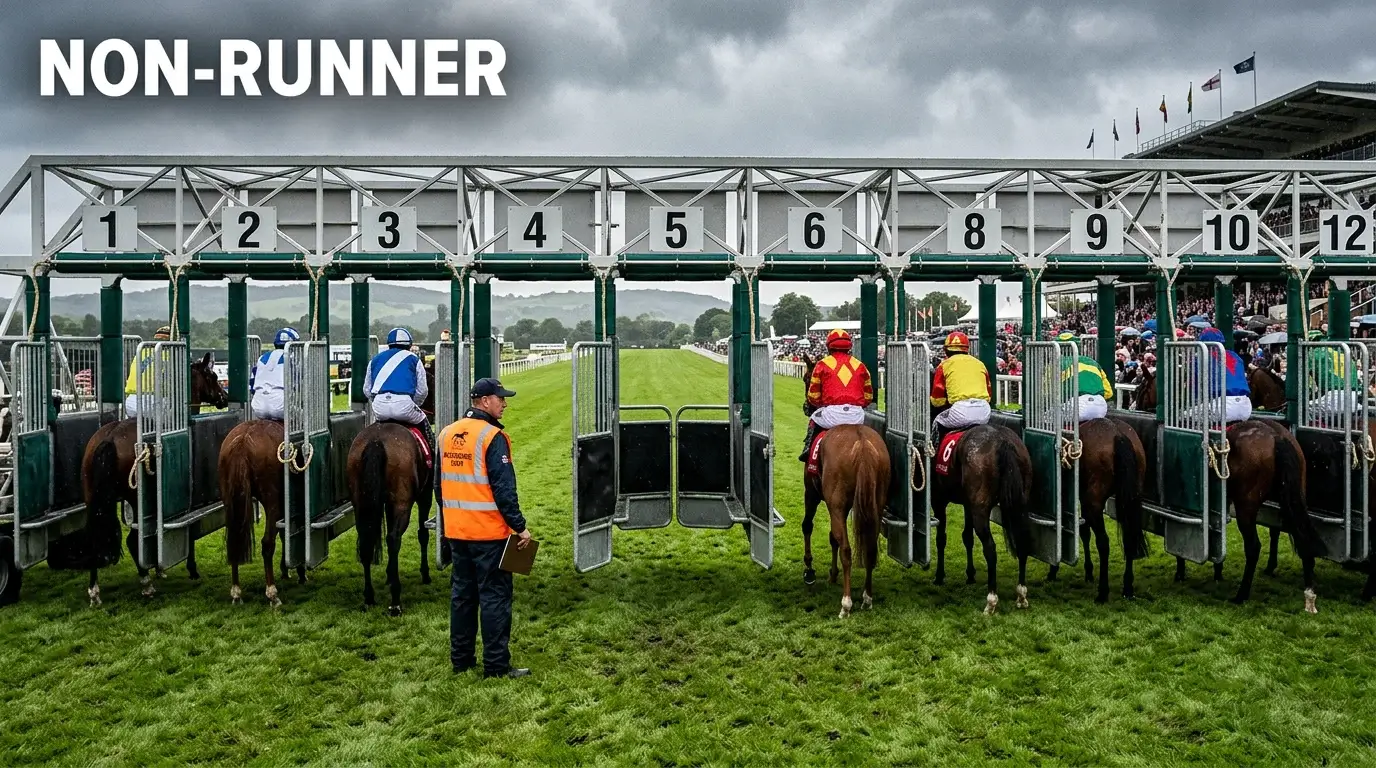
You have a £30 free bet in your account, you back the morning favourite for the 3:30, and two hours before the race your horse is withdrawn. What happens to a free bet if a horse is a non-runner? The answer is not as straightforward as it should be, and it varies between bookmakers in ways that can cost you the entire value of the bonus if you are not aware of the rules.
With a standard cash bet, a non-runner is simple: the bet is voided and your stake returned. With a free bet, the situation is murkier. Some bookmakers return the free bet token to your account, giving you another chance to use it. Others void the bet and return nothing — the free bet simply disappears. A few apply conditions: the free bet is only returned if the non-runner is declared before a certain time, or only if the original free bet was used on a qualifying market. What really happens when your horse doesn’t run depends on the specific operator, the timing of the withdrawal, and whether the bet was placed ante-post or on the day of the race.
Non-Runner Free Bets — More on this topic at horse betting bonus.
Non-Runner Rules: Free Bet vs Cash Bet
The distinction between how bookmakers treat non-runners for cash bets versus free bets is the single most important thing to understand before using a free bet on horse racing.
Cash bets. When a horse is declared a non-runner after the market has opened, all cash bets on that horse are voided and stakes returned in full. This is a universal industry standard governed by the rules of racing and bookmaker licence conditions. It does not matter whether the withdrawal happens five minutes or five hours before the race — if the horse does not run, your money comes back. The only exception is genuine ante-post bets (placed before the final declaration stage), where stakes are lost if the horse does not run, unless the bookmaker explicitly offers non-runner money back.
Free bets. Here the picture fragments. The majority of major operators will return a free bet token to your account if the horse is declared a non-runner and the bet is voided. But “return” does not always mean the same thing. Some bookmakers return the original free bet with a fresh expiry date; others return it with the original expiry intact, meaning if your free bet was due to expire tomorrow and the non-runner delay pushes you past that window, you may have fewer hours to use it than you expected. A minority of operators — and their terms and conditions specify this — do not return the free bet at all. The bet is voided, but the free bet token is consumed.
The Grand National illustrates why this matters. With a maximum field of 40 runners, the withdrawal rate between final declarations and the start can be significant. In recent years, five to ten horses have been taken out of the race in the days before, and a further two or three are sometimes withdrawn on the morning of the race. The Grand National is expected to attract more than £200 million in bets over the 2026 weekend, according to industry figures, and a portion of that money will inevitably land on horses that do not run. If you use a free bet on a Grand National contender and that horse is balloted out or withdrawn due to the going, you need to know — before you place the bet — whether your free bet will be restored.
Grainne Hurst, CEO of the Betting and Gaming Council, has highlighted the Grand National’s vulnerability to illegal operators who accept bets without the consumer protections that UKGC-licensed bookmakers must provide. One of those protections is clear non-runner policies. An unlicensed site has no obligation to return your stake — or your free bet — if a horse is withdrawn, which makes the licensed bookmakers’ non-runner policies a tangible part of the safety net that legitimate operators offer.
Non-Runner Policies by Bookmaker
Non-runner policies for free bets are buried in the terms and conditions of each operator, and they are not always easy to find. Here is the general approach taken by the major UK bookmakers — though you should always verify current terms directly before relying on any summary, since operators update their T&Cs periodically.
The most common policy among large operators — bet365, Coral, Ladbrokes, William Hill — is to return the free bet token if the horse is a non-runner and the bet is voided. The returned token retains its original expiry date in most cases, so if you claimed a free bet on Monday with a seven-day expiry and the non-runner event occurs on Saturday, you have until the following Monday to use it. A few operators extend the expiry by 24–48 hours to account for the disruption, but this is not standard.
Betfred and Paddy Power generally follow a similar policy for standard free bets, though both have historically applied different rules to promotional free bets earned through specific campaigns. A free bet tied to a particular event — “use your free bet on the 2:30 at Aintree” — may not be transferable to a different race if your horse in that specific event is withdrawn. Check the promotional terms rather than relying on the general free bet policy.
For ante-post bets, the picture changes significantly. Most bookmakers do not return a free bet used on an ante-post market if the horse is subsequently withdrawn. The bet is treated as settled — you backed a horse that did not run, and the free bet is consumed. This is the standard ante-post rule applied to cash bets as well (where you lose your stake), extended to free bets (where you lose the token). The exception is bookmakers who explicitly offer non-runner money back on ante-post markets during specific promotional windows — a deal that is relatively common in the weeks before the Grand National and Cheltenham Festival, but rare outside those events.
The Gambling Commission’s 10x wagering cap, introduced in January 2026, brought broader reforms to bonus conditions including clearer language requirements for promotional terms. While the cap itself applies to wagering on bonus funds rather than free bet non-runner policies, the regulatory push for transparency has encouraged several operators to make their non-runner terms more prominent in their help sections. If you cannot find a clear answer on a bookmaker’s website, contact their customer service before placing the bet — it is better to spend two minutes in a live chat than to discover the policy after your horse is withdrawn.
Protecting Your Free Bets from Non-Runners
The simplest protection is timing. Wait until after the final declaration stage before using your free bet. In British racing, final declarations are typically made at the 48-hour stage for flat racing and the 24-hour stage for National Hunt. Once declarations close, the field is confirmed — any subsequent withdrawals (due to the going, minor injuries, or jockey changes on the morning of the race) are far less frequent than pre-declaration dropouts.
See also Rule 4 Deductions Explained.
Avoid using a free bet on an ante-post market unless the bookmaker explicitly offers non-runner money back. The ante-post price advantage (which can be significant — a horse might be 10/1 ante-post and 6/1 on the day) is tempting, but the risk of losing the entire free bet to a non-runner makes it a poor trade in most situations. The exception is if the non-runner money back guarantee is in place, in which case ante-post free bets become one of the best uses of bonus credit available.
Diversify your free bets across multiple races rather than staking everything on a single horse. If you have £30 in free bets split into three £10 tokens, using each on a different race reduces your exposure to any single non-runner event. A withdrawal in one race costs you £10, not £30.
Finally, check the weather and going reports on the morning of the race. Significant changes to the ground conditions — heavy rain overnight turning good ground to soft, or a heatwave drying the track to firm — often trigger late withdrawals from trainers who know their horses cannot handle the conditions. If your selected horse has a strong going preference and the conditions have shifted against it, consider holding the free bet for a later race rather than risking a withdrawal.
Disclaimer. Gambling involves risk. Only bet what you can afford to lose. All offers mentioned are subject to change and carry terms and conditions set by individual operators. You must be 18 or over to open a betting account in the United Kingdom. If you feel your gambling is becoming a problem, contact GambleAware or call the National Gambling Helpline on 0808 8020 133.
