
 Available in US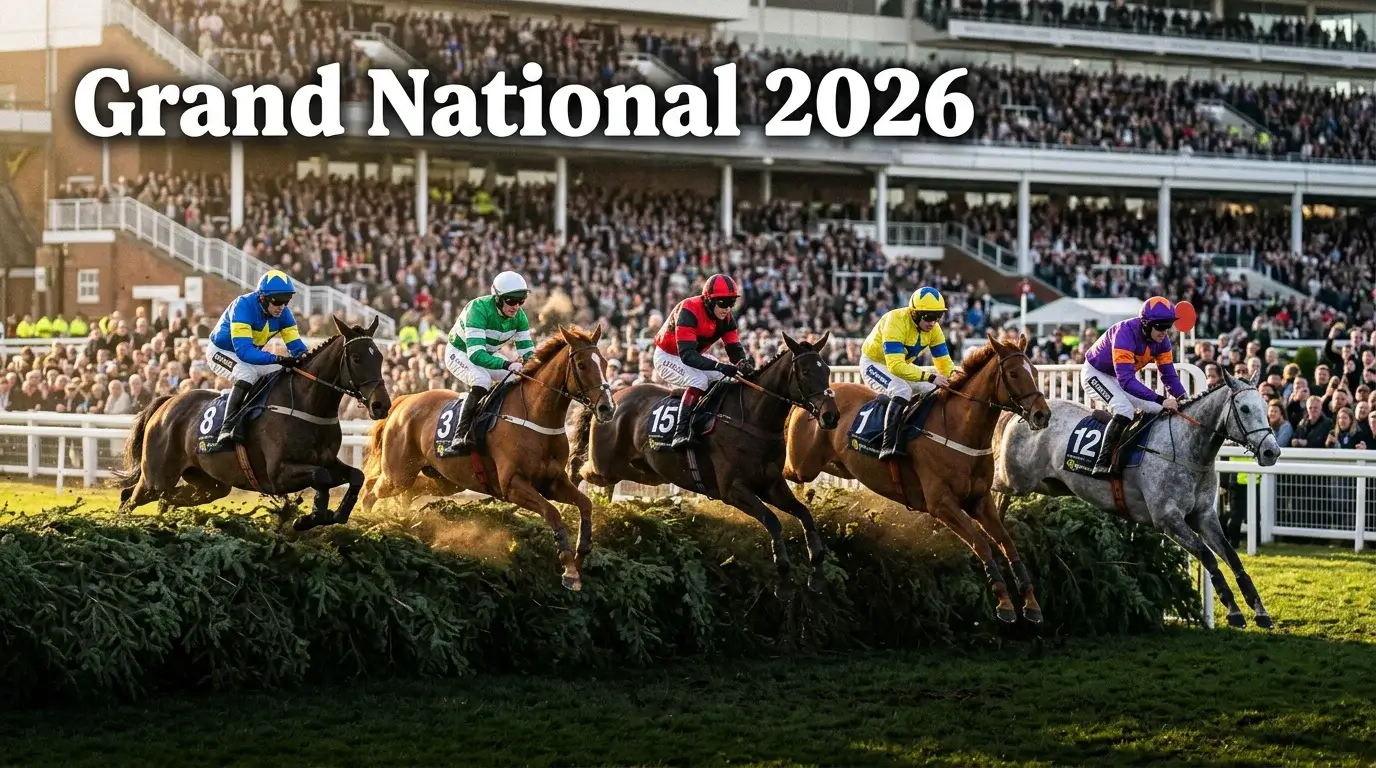
Grand National betting offers carry a weight that no other race on the British calendar can match. The Aintree showpiece is expected to generate more than £200 million in wagers over a single weekend in 2026, according to industry figures — roughly 700% more than the Cheltenham Gold Cup, the next biggest individual race. It is, by any honest measure, the nation’s biggest horse race and your biggest bonus opportunity of the year.
That sheer volume of money changes the way bookmakers behave. In the weeks before the Grand National, sign-up offers get fatter, existing-customer promotions multiply, and niche deals — fallers insurance, extra places on the big handicap, enhanced each-way terms — appear that you simply will not find on a wet Wednesday at Catterick. The catch, as always, is that not every offer deserves your attention. Some are built around wagering conditions that eat most of the value before you see a penny of it.
This guide breaks down the bonus landscape for Aintree 2026: which types of offer actually carry value, why the Grand National’s unique field structure creates promotions you won’t see elsewhere, and how to time your registration to squeeze the most from the week.
Grand National Betting Offers 2026 — More on this topic at horse betting bonus.
Grand National Bonus Offers 2026
The promotional calendar for Aintree tends to follow a predictable pattern. Bookmakers release their headline Grand National offers roughly two to three weeks before the race, adjust them as ante-post markets firm up, and then pile on day-of specials in the final 48 hours. Knowing what to expect — and what each type of offer is actually worth — saves you from snapping at the first shiny deal you see.
Free bet on registration. The classic welcome offer. Typically structured as “bet £10, get £30 in free bets” or similar. For the Grand National period, several operators increase the free bet value by £5–£10 compared to their year-round offers. The key detail is whether free bets are stake-not-returned (SNR), meaning you only collect the profit, not the stake — which typically makes a free bet worth about 70–80% of its face value in real terms. Look for offers with minimum qualifying odds of 1/2 or lower, as higher minimum odds can exclude sensible qualifying bets.
Money back if your horse falls. Fallers insurance is the signature Grand National promotion, and for good reason: in a field of up to 34 runners over four miles and 30 fences, the number of horses that fail to complete the course is significantly higher than in any other race. Most bookmakers offer this as a free bet refund (not cash), capped at £10–£25 depending on the operator. A few extend it to all three days of the Aintree Festival, not just the National itself.
Extra places each-way. Standard each-way terms on the Grand National pay four places. Several bookmakers extend this to five, six, or even seven places for the big race. Given a field of up to 34 runners, extra places meaningfully shift the probability of collecting on the place part of your bet. If you’re backing a 20/1 shot each-way and the bookmaker is paying six places at 1/4 odds, you’re covering 15% of the field on the place portion alone.
Enhanced odds specials. These tend to appear on the morning of the race: “Get 50/1 on any horse to win the Grand National” or similar eye-catching headlines. They are almost always capped at a very small stake — £1 or £2 — and paid in free bets rather than cash. Entertaining, but don’t mistake them for genuine value. They exist to drive new registrations, not to reward serious bettors.
Ante-post bonuses. Earlier in the season, some operators offer enhanced odds or free bet incentives for ante-post Grand National wagers. The trade-off is that ante-post bets are typically non-refundable if your horse doesn’t run, so the bonus must compensate for that added risk. Check whether the bookmaker offers non-runner money back on ante-post bets — a handful do during the National window.
A practical note: the best offers are not always from the biggest names. Mid-tier operators looking to gain market share during the National week sometimes outstrip the household brands on raw bonus size, though you should always verify their wagering terms before committing.
Why Aintree Bonuses Are Different
The Grand National is not just another handicap chase with better prize money. Its structural oddities — a field of up to 34 runners (reduced from 40 in 2024 for safety reasons), a unique course with the most demanding fences in jump racing, and a non-runner rate that regularly hits double digits by race morning — create a betting environment that demands its own category of promotions.
Take the field size. Most races cap at 12–16 runners. The National can have more than twice that. This single fact reshapes the mathematics of each-way betting, makes fallers insurance genuinely useful rather than decorative, and gives bookmakers room to offer extra places without destroying their margin. When a bookmaker extends each-way terms from four places to six on a 34-runner handicap, they’re conceding real ground — ground that barely exists in a 10-runner Group 1.
Then there is the question of non-runners. Horses drop out of the Grand National at a higher rate than almost any other British race, sometimes with entries reducing by 10 or more between the five-day stage and the off. If you’ve backed a non-runner, most standard bets are voided and your stake returned. But ante-post bets are not. This is where non-runner money-back promotions become genuinely valuable, and why experienced Aintree bettors actively seek them out.
There is also a darker side to the Grand National’s prominence. According to the Betting and Gaming Council, around £10 million of Grand National bets in 2025 were placed with unlicensed operators — roughly 5% of total turnover on the race. Grainne Hurst, CEO of the BGC, has described the National as “the nation’s punt” and warned that it is “being subverted by illegal operators.” For punters, the lesson is simple: unlicensed sites may offer inflated odds and no ID checks, but they carry no player protection, no dispute resolution, and no guarantee you will ever see your winnings. Every legitimate bonus listed in this guide comes from UKGC-licensed operators, which is not a marketing line — it is the minimum standard for anyone risking real money.
The combination of these factors — enormous fields, high attrition, regulatory protection — makes the Grand National a week where bonuses genuinely matter more than usual. A fallers insurance deal that saves you £20 on the National is not the same as a fallers insurance deal on a Kempton novice chase. The stakes and the risks are both amplified.
Grand National Betting Tips with Bonuses
The best time to register with a new bookmaker for the Grand National is not the morning of the race. It is one to two weeks before, during the ante-post window, when welcome offers are at their most generous and you have time to complete identity verification without the pressure of a 5:15 start looming.
See also Horse Racing Sign-Up Offers.
Once registered, the each-way bet is king at Aintree. In a 34-runner field with standard 1/4 odds and four or more places paid, each-way betting gives you a genuine shot at collecting even if your selection doesn’t win. Target horses at 16/1 to 33/1 — long enough that the place part pays meaningfully, but not so long that you’re staking on a genuine no-hoper. If your bookmaker is offering extra places (five or six), the maths shifts further in your favour.
Timing your qualifying bet matters, too. Welcome offers typically require a qualifying bet before free bets are released. Place your qualifier on an earlier Aintree race — the Thursday or Friday card — rather than on the National itself. This way, your free bets are available in your account before the big race, and you can deploy them on the National with no risk to your original deposit.
A note on ante-post selections: if you fancy a horse at a bigger price weeks before the race, an ante-post wager with a non-runner money-back guarantee is one of the few situations in horse racing where the bettor holds a structural edge. You lock in a price before the market contracts, and if the horse doesn’t make the final cut, you get your stake back. Without that guarantee, you’re absorbing all the withdrawal risk yourself — and in a race where the field regularly shrinks by 10–15% between declaration and start, that risk is not trivial.
Finally, don’t overlook the rest of the Aintree Festival. The Topham Chase on Friday and the Aintree Hurdle on Thursday often carry their own promotional offers — extra places, price boosts, money back if second — with far less public attention than the National. Competition for those markets is lower, which sometimes means better value from bookmakers who are throwing most of their marketing budget at Saturday.
Disclaimer. Gambling involves risk. Only bet what you can afford to lose. All offers mentioned are subject to change and carry terms and conditions set by individual operators. You must be 18 or over to open a betting account in the United Kingdom. If you feel your gambling is becoming a problem, contact GambleAware or call the National Gambling Helpline on 0808 8020 133.
