
 Available in US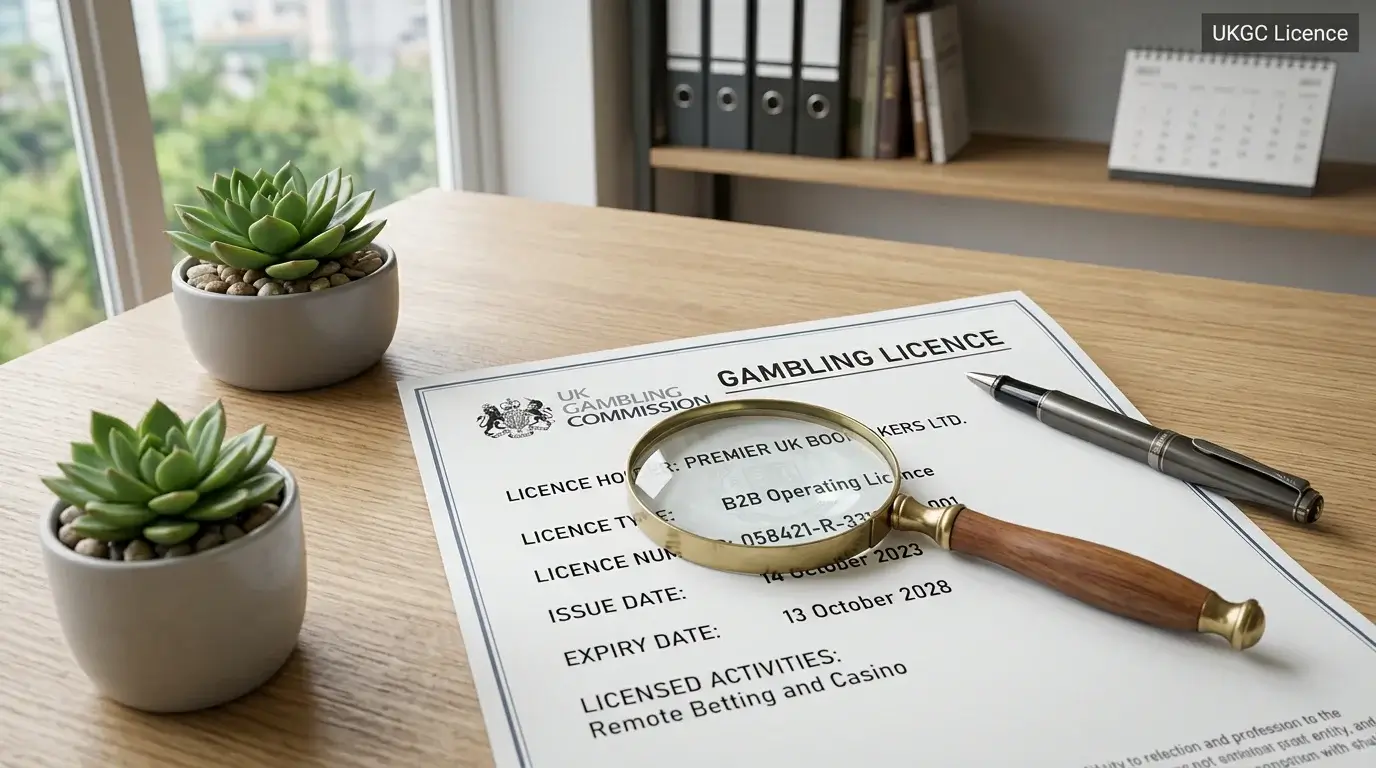
Every bonus, every free bet, every promotional offer discussed on this site comes from a UKGC licensed bookmaker — and that distinction is not a formality. According to a Racing Post survey, the proportion of UK bettors using unlicensed operators rose from 3.6% in 2023 to 4.9% in 2025, with a third of high-stakes punters admitting to placing bets on the black market. The licence that stands between you and losing everything is not a logo on a website — it is a set of enforceable legal protections that unlicensed operators do not provide and are not required to honour.
The growth of illegal gambling sites has been dramatic. If you have been tempted by an offshore operator offering no ID checks and inflated odds, this guide explains exactly what you are giving up — and why the risks extend far beyond simply not receiving a payout.
UKGC Licensed Bookmakers — More on this topic at horse betting bonus.
What a UKGC Licence Guarantees
A licence issued by the Gambling Commission imposes a specific set of obligations on every operator, codified in the Licence Conditions and Codes of Practice (LCCP). These are not guidelines — they are legally binding conditions that operators must meet to continue trading in the UK market.
Segregation of customer funds. Licensed operators must keep player funds separate from operational funds. This means that if the company goes bankrupt, your balance is protected — it does not become part of the insolvency estate. The level of protection varies (basic, medium, or high segregation), but even the minimum standard requires that customer funds are identifiable and recoverable. Unlicensed sites have no such obligation. If they go down, your money goes with them.
Fair and transparent terms. Every bonus, wagering requirement, and promotional condition must be presented clearly before the customer commits. Since January 2026, the 10x wagering cap has further constrained what operators can demand. Terms that are misleading or unfairly onerous can be challenged through the operator’s complaints process and escalated to an independent Alternative Dispute Resolution (ADR) provider. Unlicensed operators offer no ADR. If they refuse to pay, you have no recourse.
Responsible gambling tools. Licensed bookmakers must offer deposit limits, loss limits, time-outs, reality checks, and self-exclusion via GamStop. These tools are not optional add-ons — they are mandatory under the LCCP. They exist because gambling can cause harm, and regulated operators are required to mitigate that harm through active intervention. Black market operators provide none of these safeguards.
Identity verification and age checks. UKGC licensees must verify that every customer is 18 or over before allowing them to gamble. This is the most basic consumer protection in the framework. Unlicensed sites frequently skip verification entirely, which is part of their appeal to some users — but the absence of age checks also means that minors can access these platforms without any barrier.
The scale of the unregulated market underscores why these protections matter. Research compiled by Yield Sec found that visits to the 22 most popular unlicensed gambling sites grew by 522% over three years, reaching 1.3 million visits per month in 2024. That growth has been driven in part by regulatory tightening of the legal market — affordability checks, stake limits, and advertising restrictions have pushed some bettors toward operators that impose no such constraints.
The Black Market Threat
The black market in UK gambling is not a fringe phenomenon confined to a handful of shady websites. It is a growing, commercially sophisticated ecosystem that includes crypto casinos, social media betting rings, VIP schemes promoted by influencers, and offshore sportsbooks that actively target UK customers through paid advertising on platforms where regulated operators are banned from promoting themselves.
Jordan Lea, CEO of the charity Deal Me Out, has warned about the breadth of the problem: “We are seeing a significant rise in crypto casinos, fake games, and VIP schemes promoted by influencers who bypass UK regulations. The consequences of well-intentioned regulation must be considered carefully, or we risk pushing vulnerable consumers straight into the arms of the Black Market.”
The risks for individual bettors are concrete. First, there is no guarantee of payout. An unlicensed operator can refuse to pay a winning bet for any reason — or no reason — and the bettor has no legal mechanism to compel payment. Second, there is no data protection. Personal and financial information submitted to an unregulated site may be stored insecurely, sold to third parties, or used for identity fraud. Third, there is no self-exclusion. A bettor who registers with GamStop to block themselves from all UKGC-licensed sites will find that the restriction does not apply to unlicensed platforms — which means the safety net designed to prevent problem gambling has a hole in it precisely where the risk is highest.
Crypto casinos deserve particular attention. They typically accept deposits in Bitcoin or other cryptocurrencies, operate from jurisdictions with minimal regulatory oversight (Curaçao, Costa Rica, or no identifiable jurisdiction at all), and advertise through influencer partnerships and Telegram channels. The anonymity of cryptocurrency transactions makes it extremely difficult to recover funds if the operator disappears. For horse racing bettors, the allure of a crypto sportsbook is usually the absence of affordability checks and the promise of higher limits — but the trade-off is the complete absence of consumer protection.
The Betting and Gaming Council has estimated that approximately £10 million of Grand National bets in 2025 were placed with unlicensed operators — roughly 5% of the total handle on Britain’s biggest race. That figure represents real money wagered without any guarantee of fair settlement, on a platform with no dispute resolution and no obligation to honour its own terms.
How to Verify a Bookmaker’s Licence
Checking whether a bookmaker is genuinely UKGC-licensed takes less than a minute. Go to the Gambling Commission’s website and use the public register of licensed operators. You can search by company name, trading name, or licence number. Every legitimate UK bookmaker will appear in this register with their licence status shown as “active.”
See also Horse Racing Betting Tax UK.
On the bookmaker’s own website, look for the UKGC licence number, which is typically displayed in the footer alongside the Gambling Commission logo. The presence of a logo alone is not sufficient — unlicensed sites sometimes display fake UKGC badges. Always cross-reference the licence number against the Commission’s public register to confirm it matches the operator you are dealing with.
Red flags that suggest an operator may not be legitimately licensed include: no visible licence number anywhere on the site, no link to the Gambling Commission in the footer, acceptance of cryptocurrency as the only deposit method, no identity verification required before betting, no deposit limit prompt when creating an account, and promotional terms that seem too good to be true (e.g., no wagering requirements on any bonus, unlimited withdrawal amounts, or odds dramatically above the market average with no cap).
If you are already registered with a bookmaker and are unsure of their licence status, contact their customer support and ask for their UKGC licence number. A licensed operator will provide it immediately. An unlicensed operator will either deflect the question or point to a licence from a non-UK jurisdiction, which does not provide the same consumer protections.
Disclaimer. Gambling involves risk. Only bet what you can afford to lose. All offers mentioned are subject to change and carry terms and conditions set by individual operators. You must be 18 or over to open a betting account in the United Kingdom. If you feel your gambling is becoming a problem, contact GambleAware or call the National Gambling Helpline on 0808 8020 133.
